
[V2050/01] The Investment Thesis
Residential supply
hasn't kept up
with how people
want to live.
Portugal has extraordinary places. Its residential stock was largely designed for another generation. Verde 2050 is a residential investment platform built to close that gap — for Portuguese families and international residents alike.
i. The Gap
How people want to live has changed. What's built for them hasn't.
Expectations of home have moved. People — Portuguese and international alike — increasingly want better design, healthier neighbourhoods, more nature, stronger communities, and higher quality living. The shift is quiet, but it's cumulative and generational.
The residential stock hasn't followed. Much of what's built for sale in Portugal today was designed for another generation — cheap, dense, disconnected from nature, indifferent to health, poorly detailed. The opportunity is not simply more housing. It is better housing.
Layered on top of that shift is a wave of lifestyle migration — affluent, mobile professionals relocating their primary residence to the Lisbon coast. Not tourists. Not remote workers. A category of long-term buyer that Portugal has never had at this scale.
Two distinct buyers. One structural under-supply. One durable opportunity.
Portugal · the south
The new life is being made where the light is.
ii. The Numbers
The capital is already moving. The demographic is already arriving.
+40%
Portugal's foreign-resident population since 2020
~1.5M of 10.6M people foreign-born
4,987
Golden Visas granted in 2024
+72% YoY · US nationals now 30%
€3.5B
FDI into Portuguese real estate (2024)
60% from international capital
+17.7%
Residential prices, Portugal (2025)
+28.6% in Comporta/Melides
€9,000/m²
Luxury benchmark in Comporta
40% transactions are foreign capital
€6.8T
Global wellness economy (2024)
Forecast €9.8T by 2029
Sources: INE Portugal · SEF · Eurostat · Global Wellness Institute
iii. The Forces
Six forces reshaping what people want from a home.
01
Remote work is permanent
The pandemic forced the experiment. 35% of Western European knowledge workers now work at least partially remote, permanently. The mechanism of lifestyle migration.
02
Urban quality of life has degraded
London, Paris, Amsterdam, the major US gateways — more expensive, less safe, more polarized, more hostile to family formation. A structural decline, not a temporary problem.
03
Wellness is the dominant lens
No longer a category — the framework through which a generation makes every decision, from food to housing to medical care. 6.1% of global GDP, heading for 7.1% by 2029.
04
Longevity is the new luxury
The wealthy are no longer buying watches and cars. They are buying time — measured in healthspan, biomarkers, and clinical infrastructure. Top-tier longevity memberships run €5–17K/year.
05
The €60T wealth transfer
The largest intergenerational wealth transfer in history is moving from baby boomers to Gen X and millennials. The inheritors are choosing differently. The capital follows.
06
Geopolitical pressure is accelerating it
War on Europe's eastern border. Polarized politics in the West. Climate stress in the South. Energy and currency risk everywhere. Affluent families are diversifying not just portfolios — but where they physically live. Portugal is neutral, stable, NATO, EU, and on the Atlantic. The safe-haven trade has a coastline.
iv. The Lifestyle-Migration Wave
One major driver. Not the whole thesis.
The median lifestyle migrant arriving in Portugal is 38–52 years old, holds €500K–€5M in liquid wealth, is still professionally active, and brings a partner and one or more children. Founders. Finance professionals. Consultants. Senior operators. A category of buyer Portugal has never had at this scale.
They want to hustle for the right things — for health, for family, for community, for meaning. They are one important driver of the residential thesis. The Portuguese buyer, treated in the next chapter, is the other.
38–52
Age range
€0.5–5M
Liquid wealth
60%+
UK / US / DACH / NL
1+
Children moving with them
v. The Portuguese Spillover
The lifestyle migrant lifts the Portuguese buyer.
Inbound capital does not arrive in a vacuum. It hires architects, builders, lawyers, advisors, designers, hospitality staff. It bids up wages. It accelerates wealth accumulation across the entire Portuguese middle and upper-middle class — the same demographic that, a decade ago, would have struggled to buy a quality home in the greater Lisbon area.
A rising Portuguese consumer is now stepping into the housing market with real income, real savings, and real expectations. They want quality construction. Energy efficiency. Modern layouts. Access to schools and transport. They want what the market hasn't built in twenty years.
And the market cannot deliver. Portugal sits on a structural housing deficit of approximately 150,000 units, with an annual supply gap of around 25,000 units per year. Greater Lisbon absorbs most of the pressure.
Verde 2050 builds for the lifestyle migrant — and for the rising Portuguese buyer the cycle is creating each year. Two demographics. One supply gap. One operating platform.
~150K
Total housing deficit, Portugal
Concentrated in greater Lisbon
~25K
Annual supply gap, units/yr
Local demand outpacing build
20 yrs
Of accumulated under-build
A multi-decade catch-up cycle
vi. What's Missing
They arrive in Portugal and the experience is broken.
Each of the eight things a lifestyle migrant needs is delivered today by a fragmented, sub-scale, founder-led operator. No integrated platform. No operator who sees them as a multi-decade customer.
01
A home they can buy
Designed for how they live
02
Clinical & wellness infra
Multi-decade healthspan
03
A community of peers
Similar choices, similar stages
04
Schools for their kids
International, integrated
05
Trusted professional infra
Banking · tax · legal
06
Wellness-aligned consumer
Food · retail · products
07
Network effects with peers
Friendship · business
08
Brand & identity
Reflecting the choice they made
What we build
Wellness real estate is growing 15.8%/year through 2029.
vii. The Asset Class
Wellness real estate. Defined. Measured. Compounding.
Wellness real estate is a defined category — not a marketing phrase. The Global Wellness Institute classifies it as homes and communities proactively designed to support the holistic health of their residents.
It is the single fastest-growing sector of the entire wellness economy.
19.5%
Annual growth 2019–2024
Wellness real estate sector
15.8%
Projected through 2029
3× faster than global GDP
25–50%
Pricing premium
Branded wellness vs. conventional luxury
$100B+
Branded residential portfolios
Aman, Six Senses, Equinox, Auberge, Four Seasons
What makes it wellness real estate
01
Designed for health
Non-toxic materials. Optimized indoor air quality. Water filtration. Circadian lighting. Acoustic design. Thermal comfort. Measured engineering, not aesthetic choices.
02
Sites of environmental quality
Clean air. Low light pollution. Climate resilience. Ecological buffer. Walkability. Access to nature, water, and trail. The location is part of the asset.
03
Integrated amenities
Not a pool and a gym. A spa, a clinic, treatment rooms, recovery, programmed movement, organic food infrastructure — operated by a credentialed wellness brand.
04
A branded operating layer
The brand is part of the asset. Concierge, hospitality, wellness, security, community programming — the operating service is what unlocks the 25–50% premium.
That is the asset class on Verde 2050's balance sheet. Real estate designed and operated as wellness infrastructure — in the geographies absorbing the largest concentration of lifestyle migrants in Europe.
viii. Our Standard
The category is real. This is our take on it.
Every Verde 2050 development — starting with the multi-family residential communities we're building on Portugal's coast — is anchored in two commitments. Not aesthetic choices. Engineering standards, applied to every plot we acquire and every plan we draw.
PILLAR 01
Biophilic design.
Biophilic design is the practice of integrating nature — sunlight, plants, water, and organic materials — into the built environment. In a Verde community it is not decoration. It is the structure.
- Daylight-first plans — orientation, glazing and courtyards designed around the sun, not the plot line.
- Native landscape — mature planting, living walls, and species that belong on this coast — never imported cosmetic greenery.
- Water as element — fountains, reflection pools, natural filtration — engineered for cooling and calm, not just show.
- Materials from the earth — cork, stone, lime, timber, terracotta. Non-toxic by specification, sourced regionally where possible.
PILLAR 02
Wellness-led urbanism.
Cities and communities are increasingly understood as health environments. Research now links the built environment directly to cortisol, cardiovascular risk, cognitive performance and long-term disease outcomes. We build with that as the brief.
- Amenities that move health — saunas, cold plunges, sundecks, treatment rooms, movement studios — programmed, not just installed.
- Design that heals — circadian lighting, acoustic care, indoor air and water quality, thermal comfort — measured, not marketed.
- Partnerships that compound — clinicians, longevity practitioners, nutritionists and studios who set the standard in Europe. Their protocols, on-site.
- Walkable by default — daily movement built into the plan — not something residents have to schedule around traffic.
This isn't a design flourish. It is where the entire category is moving. The Global Wellness Institute measured the wellness real estate market at $548 billion in 2024, projected to exceed $1.1 trillion by 2029 — growing nearly four times faster than the broader construction industry.
Buildings certified for occupant health now trade at rental premiums of 4.4% – 7.7%. Branded wellness residential — Aman, Six Senses, Equinox — commands 25 – 50% above conventional luxury. The premium is measurable, not aspirational.
We are building small, private communities in Portugal to this standard — before the institutional weight arrives.
$548B → $1.1T
Wellness real estate market
GWI · 2024 → 2029
4.4 – 7.7%
Rental premium
WELL-certified buildings
25 – 50%
Branded wellness premium
vs. conventional luxury
References: Global Wellness Institute · Build Well to Live Well 2025 · WELL Building Standard · Impact One — On the rise of wellness-led urbanism.
ix. The Verde 2050 Play
One company. Three disciplines. Two customers.
A vertically integrated real estate developer built to acquire, license, and build wellness-led residential communities across Southern Europe — and quality mid-market homes for the rising Portuguese buyer. Anchored in Cascais. Branded under one identity.
01
Land Origination
The edge
Off-market plots surfaced through a local network on Portugal's coast. Sintra, Cascais, Comporta. Acquired before the rest of the market sees them.
02
Licensing & Entitlement
The compounder
The patient work of permits, PIPs, and masterplanning. Turning raw land into shovel-ready, valued real estate — where most of the unlevered upside is created.
03
Wellness Development
The product
Non-toxic build, clinical and recovery infrastructure, walkable masterplans, real proximity to nature. Small private communities for the lifestyle migrant — and quality mid-market homes for the rising Portuguese buyer.

x. Why Portugal, Why Now
The inflection point is now.
Portugal is the epicenter of European lifestyle migration. The operator landscape is mature enough to consolidate, fragmented enough to differentiate. The regulatory environment is structurally favorable. The window to build a category-defining brand from inside the move — rather than as an institutional latecomer — is approximately 24–36 months.
In 3–5 years, IHG and Marriott will be flagging Portuguese boutique properties at scale. Entry multiples will be 2–3× today.
xi. What We Believe
Six beliefs that shape how we allocate capital.
- 01
Residential supply hasn't evolved as quickly as how people want to live — and that gap is durable.
- 02
Two buyers, not one: Portuguese families and international residents. Both underserved by the market as it exists today.
- 03
Better design and better health compound value over the long term. The asset class rewards discipline, not fashion.
- 04
The right structure is project-specific SPVs — ring-fenced, transparent, aligned to outcomes. Not blind funds.
- 05
Founders should hold personal capital in every deal they structure. Alignment isn't a slogan; it's the terms of the memo.
- 06
The ambition is not projects. It is a residential investment platform — with real AUM, multiple strategies, and the trust of both private and institutional capital.
xii. The Founder
Fifteen years in tech.
Pulled back to the physical world.
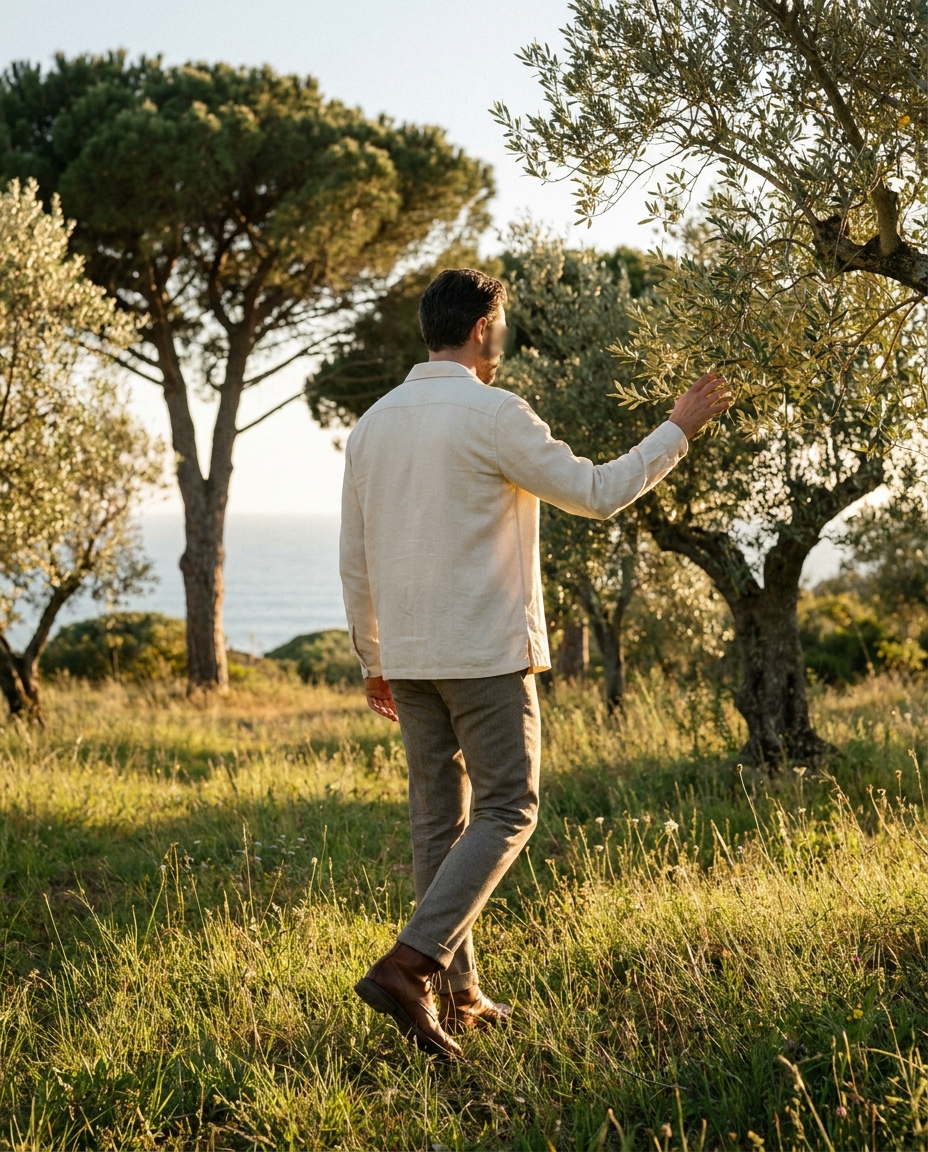
Verde 2050 is founded and led by Pieter van Herpen. Fifteen years building inside tech — and quietly drawn the whole time to the opposite end of the spectrum: land, the outdoors, the way a place actually feels to live in. Growing up across continents, the constants were never countries. They were green, open space, and time spent outside.
He arrived in Portugal during Covid. The pull was immediate, and so was the gap — a coast filling fast with people who had decided to live differently, and almost no residential product designed for the way they actually wanted to live. Sun-filled, walkable, green at the centre, outdoor by default. He set out to build it.
Today he sources every plot personally. Walks the land. Sits across from local landowners, mayors, architects, builders. Operates the company hands-on out of Cascais. There is no acquisitions team behind a deck — the founder is the deal pipeline.
Follow the hunt openly on Instagram. The plots in the feed today are the SPVs investors are invited into tomorrow.
The Invitation
One project at a time.
Compounded into a platform.
Verde 2050 is building for the long term. Private and institutional capital that shares this thesis — and this timescale — should get in touch.